Trimbakeshwar Evening Aarti Timing Guide | Darshan Tips
Introduction
Witnessing the Trimbakeshwar evening aarti ranks among the most memorable parts of a visit to this sacred Jyotirlinga. The ritual, timing, and atmosphere all come together for a deeply spiritual experience. This guide covers what to expect and how to plan your visit around it.
Many devotees specifically time their trip around this ceremony, so understanding the basics beforehand helps you make the most of your visit.
What Is the Trimbakeshwar Evening Aarti?
The evening aarti at Trimbakeshwar involves a ceremonial offering of light, incense, and prayers to the Jyotirlinga. Priests perform this ritual with lamps, bells, and traditional chants, creating a deeply devotional atmosphere. Devotees gather to watch and participate from designated areas within the temple.
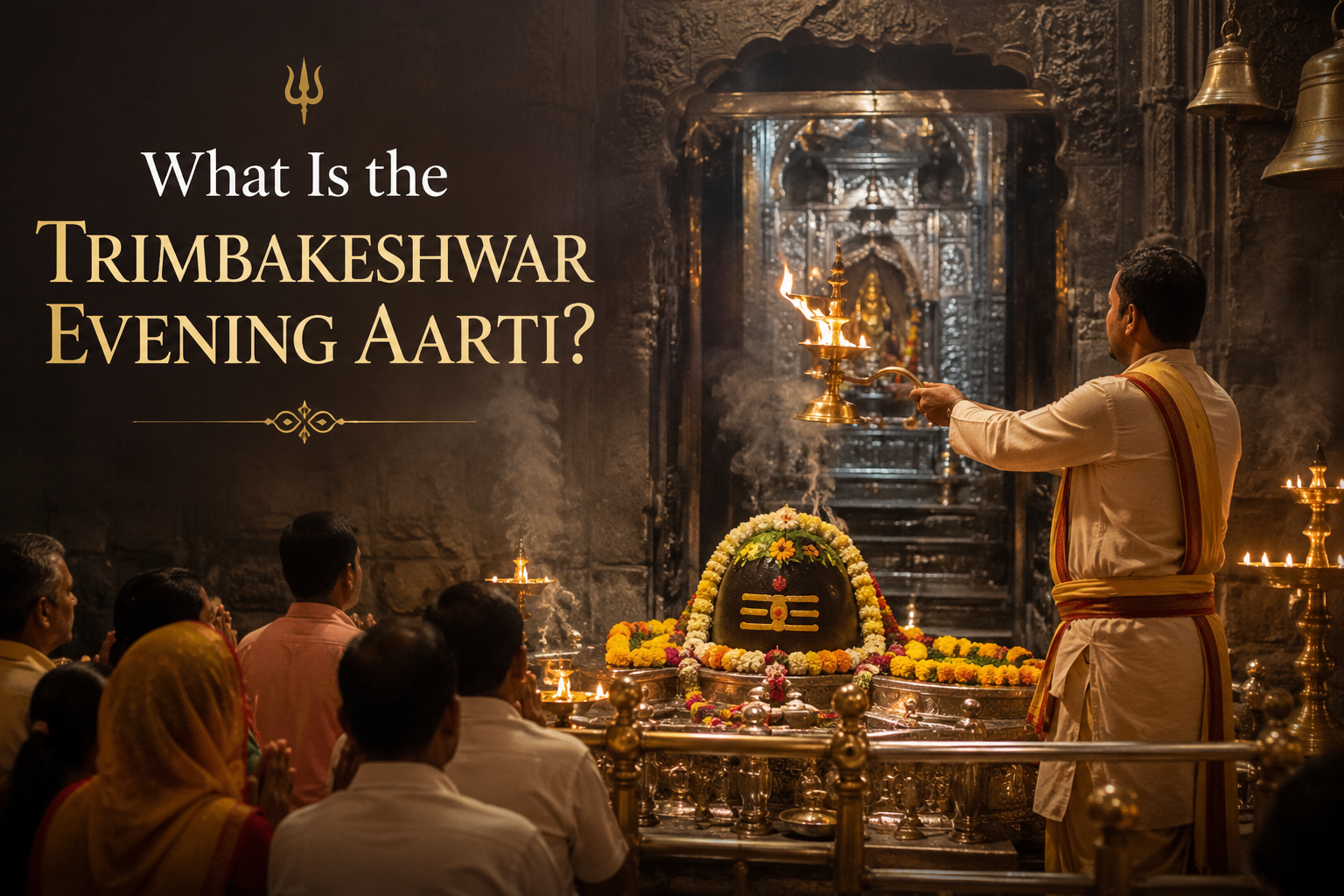
This ceremony forms one of several daily rituals at the temple, alongside morning aarti and midday puja. The Trimbakeshwar evening aarti specifically marks the close of the day’s worship, and many devotees consider it the most atmospheric of the daily rituals.
Trimbakeshwar Evening Aarti: Approximate Timing
Reported timings for the evening aarti vary somewhat depending on the source, generally falling somewhere between 6:00 PM and 9:00 PM. Most consistent reports point to around 7:00 PM as the typical start time. Since exact timing can shift with the season and during festivals, it’s best treated as an approximate guide rather than a fixed schedule.
Arriving at the temple with some buffer time before your expected slot helps you avoid missing the start of the ceremony, given this natural variation. Asking locally or checking at the temple entrance on the day of your visit remains the most reliable way to confirm the exact schedule.
Trimbakeshwar Evening Aarti: What to Expect
The ceremony typically lasts a while, with priests moving through a sequence of offerings accompanied by devotional singing. Devotees often stand or sit in designated areas, watching respectfully as the ritual unfolds. The atmosphere tends to feel especially powerful as lamps illuminate the sanctum in the evening light.
Photography is generally restricted during aarti and inside the sanctum, so it’s worth setting expectations accordingly and focusing on the experience itself. Many devotees describe simply closing their eyes and absorbing the chanting as one of the most memorable parts of the whole visit.
Dress Code and Etiquette for the Evening Aarti
Modest, traditional clothing is expected for temple visits, and this applies especially during aarti. Many sources recommend simple attire, such as a kurta-pyjama or dhoti for men and a saree or salwar kameez for women, though comfort and modesty matter more than an exact outfit. Removing footwear before entering remains standard practice throughout the temple complex.
Keeping quiet and respectful during the ceremony, rather than talking or moving around unnecessarily, helps maintain the devotional atmosphere for everyone present. Carrying a shawl also helps during cooler evenings, especially in winter months.
Best Viewing Tips for the Evening Aarti
Arriving at least 20 to 30 minutes before the expected start time generally secures a better viewing spot, especially during busier seasons. Weekdays tend to see smaller crowds compared to weekends, so plan accordingly if you prefer a quieter experience. Standing toward the sides of the designated viewing area, rather than pushing toward the front, often works better in a crowded setting.
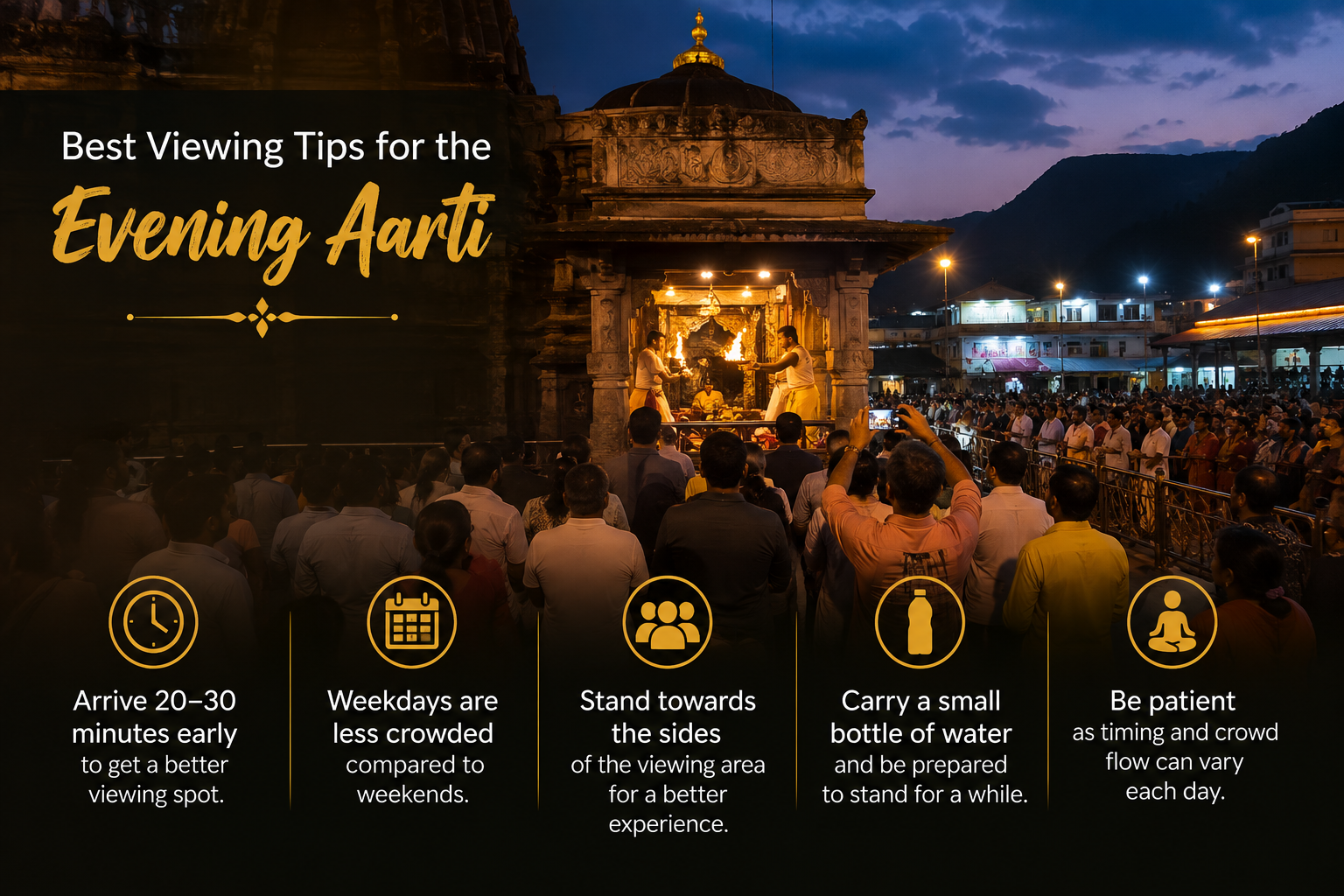
Patience matters here, since exact timing and crowd flow can vary from day to day. Bringing a small bottle of water and being prepared to stand for a while also makes the wait more comfortable.
Trimbakeshwar Evening Aarti: A Note on Bookings and Passes
Some websites advertise “VIP darshan” passes or paid priority access for aarti viewing. Exercise real caution here, since this space has documented scam reports involving fake websites and unofficial payment requests tied to this exact temple town. Never send advance payment to an unfamiliar website or account for aarti access or special darshan.
If you’re interested in a paid or priority option, verify it directly through the temple’s recognized administration rather than a third-party website you haven’t independently confirmed. A few extra minutes spent verifying can save you from a costly and disappointing experience.
Combining Aarti With Your Overall Darshan Visit
Many devotees plan their day around both morning darshan and the evening aarti, using the hours in between to explore Brahmagiri hill or the Kusavarta Kund. Our broader Trimbakeshwar darshan guide covers temple history, travel routes, and additional safety tips for planning your full visit.
Building your schedule around the aarti, rather than rushing to catch it at the last minute, generally makes for a calmer, more meaningful experience. Treating the aarti as the anchor point of your day, and planning other activities around it, tends to work better than the reverse.
Frequently Asked Questions
What time does the Trimbakeshwar evening aarti start?
Reports vary, but most sources point to approximately 7:00 PM. Confirm on arrival, since timing can shift seasonally.
Is photography allowed during the evening aarti?
Generally no. Photography stays restricted during aarti and inside the sanctum out of respect for the ritual.
Should I book a VIP darshan pass online in advance?
Exercise caution. Verify any paid access option independently before sending payment, given documented scams in this space.
How early should I arrive for a good viewing spot?
Arriving 20 to 30 minutes before the expected start time usually helps, especially on weekends.
What should I wear for the evening aarti?
Modest, traditional clothing works best, along with removing footwear before entering the temple complex.
Conclusion: Plan Your Trimbakeshwar Evening Aarti Visit
Witnessing the Trimbakeshwar evening aarti offers a genuinely moving experience when you plan around it thoughtfully. Arrive early, dress respectfully, and stay cautious of any unofficial booking offers you encounter along the way. A little preparation goes a long way toward a peaceful, memorable evening at this sacred site.
If your pilgrimage also includes Shegaon, explore our verified Bhakt Niwas booking guide for that part of your journey. Jai Gajanan Maharaj!